I’ve been seeing a trend recently where people are claiming that ‘kids don’t know how to read’ which I thought was a strange, and mostly fear mongering but the more I look, the more I see…
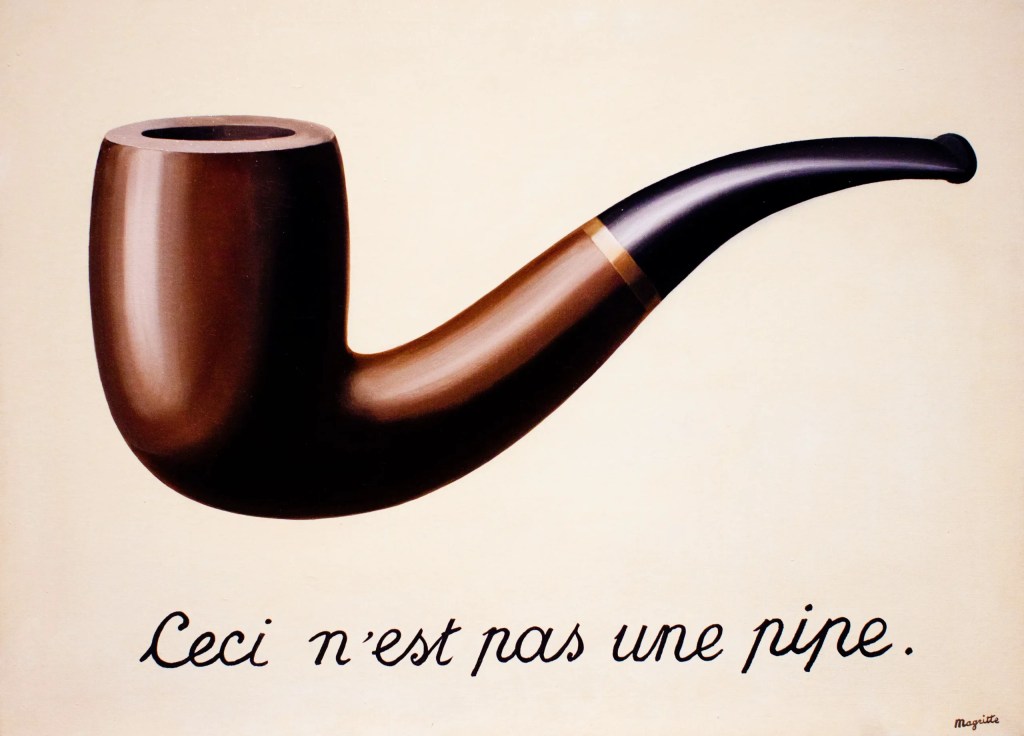
And these people are right, but it’s not just kids. Most people are losing the ability to ‘read’ nowadays. But what does that even mean.
At its most basic, reading means ‘to look at and understand the meaning of written or printed words or symbols’. (Source)
Most of us who have studied at school would have done some variation of this in their own language at school. For me it was English, and in my final years of high school I was fortunate enough to take ‘Literature’ as a subject. I always enjoyed reading and learning through books, but it wasn’t until I began studying literary criticism in university that I was able to understand the true power of reading.
You see, reading is not just about consuming words on a page, that is only the first step. Seeing the words and being able to make sense of them is only the most basic level of reading.
Yet, this is the level that I believe most people are stuck at. They see the words before them, and instead of going the next step to assess context, evaluate reliability and judge how relevant or useful the information may be, they apply their own opinions to it immediately.
I see this all the time in comment sections across social media platforms, in ridiculous and exaggerated celebrity scandals and of course (and most embarrassingly) in politics. People rarely seek to understand other people, instead immediately jumping to cancelling others or labelling them (possibly unjustly) for a few comments.
Miscommunication online
It utterly blows my mind how this miscommunication is so frequent and so disproportionate. There are a multitude of reasons for this, don’t get me wrong, and unfortunately I don’t have time to go into them all today. However, I believe there is a growing distrust of others, and a growing sensitivity to the world around us. People of all generations struggle to consider other people’s thoughts and opinions, as they constantly ask ‘what’s in it for me?’
As we consider each other less, we are less likely to take the time to understand another person’s different opinion, including how and why they may think that way. Unfortunately, the less we do this, the more miscommunication happens.
I see it a lot with talks about racism, where (despite what most internet users may think) people may express views that are racist or sexist or otherwise unhelpful, and instead of seeking to understand why this person thinks the way they do, they are labelled racist or sexist or whatever and cancelled.
Personally, I still think that ‘cancel culture’ is one of the stupidest things to ever arise on the internet for many reasons, but mostly because it doesn’t allow for growth. There are certainly people out there with ignorant and harmful beliefs, but judging and discarding them means you deprive them of the opportunity to grow.
Living is about learning, and we are all products of our environment. One does not come out of the womb with all the information they need to live a perfect life. Instead, we must learn and grow daily, and that is fundamentally what community is for! Despite what everything wants to tell you these days, it is your responsibility to care for people and help them when they need. Occasionally, people do need correction and guidance for their incorrect views because maybe, just maybe, they have never actually learned anything different.
I’m reminded of those sweet videos of young children from across the world interacting with people who look different from them for the first time. Asian children who are stunned by the ways African’s look, and young African children who are shocked by the white skin of Europeans. Is it racist for them to be confused, and to question something that they have never seen before? I don’t believe so.
“But CC,” you may argue, “adults are different!” Yes, I agree, but also not entirely. There are so many things in this world that I have never experienced before, seen or understood. There will always be new things for me to encounter, aspects of life wherein I (and you too!) are like these young children. I’m reminded of my younger brother utterly lost as he learned how to stack a dishwasher for the first time, having never seen such a thing before. While I thought the entire thing was so obvious, because I already knew how to do it, he was confused and understandably frustrated when we always told him he was doing everything wrong.
The same goes for bigger examples, like working a new job or taking on a new role. I recall learning the hiring process for the company that I worked at, and how many buttons there were in the process, how many steps I had to follow, how many mistakes I had to make for it all to succeed. While my superiors thought the entire thing to be easy, I struggled with the new process because none of my previous work could apply.
I believe the same goes for our beliefs and perceptions of the world. Do not mistake this as an excuse for racism or sexism, but I merely want to present the idea that many people have spent a lot of their lives with these beliefs, and being challenged on it can be alarming. Unfortunately, instead of continuing to give these people the opportunity to understand how and why these beliefs are harmful and not worth having, people simply disregard them as sexist or racist which solves nothing. These people don’t realise what they have done wrong, and may cling to their beliefs even tighter because those with differing views were so awful they don’t want to consider anything different.
Unfortunately, most people are more concerned with their own moral superiority, and thus refuse to even allow the space for growth. Everyone is divided into two groups: either they are ‘morally sound’ and thus believe everything ‘properly’ or ‘correctly’, just like you, or they are ‘morally perverse’ and cannot be accepted, listened to, or allowed in your space.
For an interesting take on the rise of Gen Z in the workplace, check out this Forbes article – but please try to exercise the same caution that I talk about in this article! From my own reading, there were some interesting takes and important ideas raised, but I was also able to pick up on a perspective of antagonism against Gen Z – let me know your thoughts!
Miscommunication online
This inherent selfishness is certainly one of the results of isolation that has carried over from the pandemic years and which is perpetuated by Internet Age. As people are stuck behind screens, reading is becoming more individualised, and people are becoming lazy in their comprehension, instead projecting their own ideas onto the words they see.
As an avid reader and literature student, I see this most often with the books that are circulated online. It extends to other media as well, but for this blog post I will speak only about books (See this video for an amazing rant about the failure of entertainment today).
Romance has always been one of the largest genres in literature, as a billion-dollar industry, but the conversations around it have been very interesting.
As a mostly self-indulgent genre, people become used to the tropes and templates of a romance story, and they become predictable. In an article for The Guardian discussing the rise of romance novels, Emily Henry is quoted as saying that, “When you’re feeling anxious or overwhelmed, it’s such a gift to pick up a book that you know might put your heart through the wringer but will ultimately turn out OK.” So, this is not necessarily a bad thing, and I absolutely believe they have their place in the world. After all, I’ve enjoyed a handful of romance novels in my life too!
However, when that becomes all you know, you can only apply that framework to other ideas. I think of Lolita by Vladimir Nabokov, a shocking book about the relationship between a man and the girl he essentially kidnapped and abused for years. It is a painful but intriguing story, and one that is most certainly not a romance. Yet, if you have only read romances (even ‘dark romances’, which…yikes don’t get me started), then how could you read this book as anything different? I’m not saying it’s impossible, just that it is unlikely.
Summary
Of course, the fault does not lie with people who choose to read romance. I am suggesting that this inability to read is a systemic issue with many repercussions. The inability or perhaps ‘unlearned ability’ to distinguish between themes, genres, and messages in different books is a real issue, and it bleeds into our social relationships too, as discussed in the theoretical examples above.
Yet, like all things in life, the ability to read can (and should!) be learned. Training yourself to be able to read, comprehend, analyse, evaluate, judge, and apply texts is crucial but it takes time. I have seen the growth in my own life throughout my high school and university years, and I hope that this ability continues to improve.
To begin enhancing your own ability to read better, I have linked some YouTube videos below that I enjoyed and learned a lot from. I also include the following questions, which I believe are some of the most important for starting your own reading journey.
Questions:
What is the text that I’m reading? – form, genre, purpose, setting, time period,
Who am I reading about? Who are the characters within this story (normal, rebels, outcasts, powerful, feared, dangerous…)
What is the perspective the book is written from? NOTE: this is not necessarily the author’s perspective or your own! This is the way the text is presented to you.
What am I, as a reader, positioned to think about this? Is the author trying to tell me something? Do they want me to think a certain way?
(Hint: Lolita is written from the character who ‘loves’ Lolita, but as a reader, we are positioned to be disgusted by him.)
What is an important theme or recurring idea? Do the characters often discuss fate, freedom, love, power, fear, anger etc. The theme comes from the way these ideas are presented.
Do I agree with this characters choices? Why or why not? What would I do differently? Why didn’t the character do that?
What is my main takeaway from reading this book? This does not need to be the ‘correct’ one or even a super ‘literary’ one. It is simply inviting you to reflect on the story as a whole, and recall an important detail about the book for future reference.
Learn to study the story in front of you! You may disagree or think differently at times, but don’t fall into the trap of thinking that only you have the ‘correct’ way of thinking. Stories are pathways to new possibilities, so see what the author is saying and not saying – and try not to let your personal feelings get in the way.
Videos
How To Get The Most Out of A Book
How To Read Critically and Engage More With Books
A beginner’s guide to Critical Literary Analysis

 Devin's World
Leave a comment