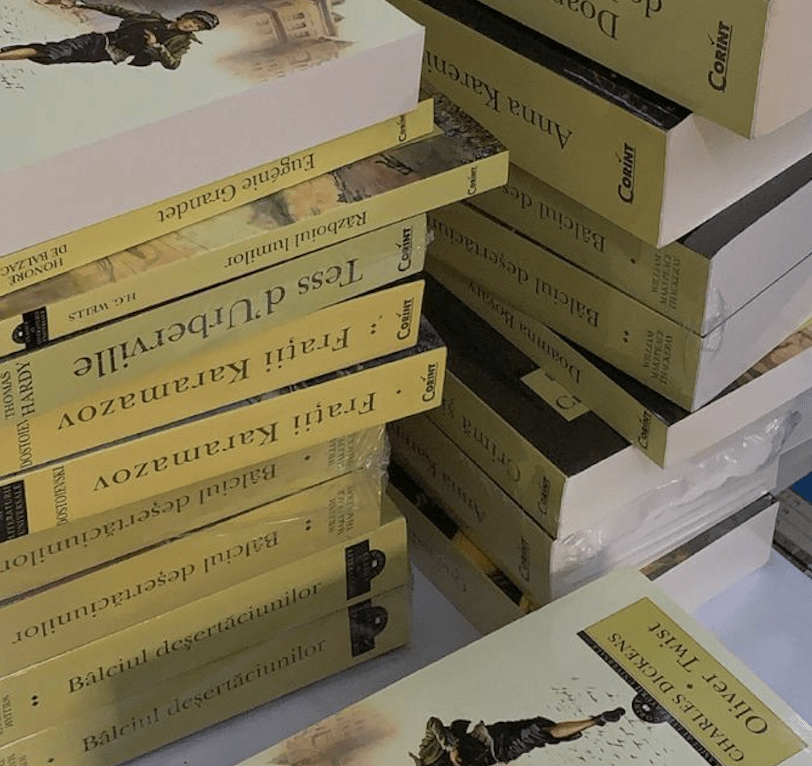
Recently in my time online, I have seen so many posts of people dissing fantasy book titles because they ‘all sound the same’. Now I agree that many of them actually do, and it can be fun to joke about, but it got me thinking. Book titles are one of the most important parts of a book, as it is the first thing potential readers might see or hear about. As a result, it is a lot more important than you might think.
So today, I thought I would talk about this a bit more in depth, and had a lot of fun learning about this. I also have a video version of this blog post here on my YouTube channel if you’d prefer to listen to me talk.
Let’s begin by talking about some of the ‘formulas’ people are making fun of and talk about why they exist
The [Adjective] [Noun] of [First Name] [Last Name] such as:
- The Curious Case of Benjamin Button
- The Seven Husbands of Evelyn Hugo
- The Invisible Life of Addie LaRue
[Noun] of/and [Noun]
- Throne of Glass
- A Curse of Queens
- From Blood and Ash
- Serpent and Dove
The [profession]’s [relation/thing]
- The Time Traveler’s Wife
- The Handmaid’s Tale
- The Emperor’s New Clothes
[Noun] of [Noun] and [Noun]
- A Court of Thorns and Roses (ACOTAR)
- Daughter of Smoke and Bone
- There’s actually a whole list haha ⇒ https://www.goodreads.com/list/show/90430.The_Blank_of_Blank_and_Blank
So you can see that there are a few formula’s here that author’s tend to follow and as most of these books and stories are quite popular, we can assume that they sell well.
Typically, these title formula’s can help readers to identify the genre and content of the book, while also pointing them to other similar books. This links books into groups, so that people who might have enjoyed one book (like ACOTAR), may associate it with another book or series, therefore making them more likely to read it.
Fundamentally, titles are supposed to give readers insight to the stories, and encourage readers to pick them up. I admit that in recent years I don’t think I have bought that many books solely because of the titles, but I did have to pick a title for my book series.
Of course, when writing a fantasy series, picking a title is never as simple as just choosing a couple of words. I had to choose the overarching name for the series, and a title format that would link all my books and yet differentiate me just enough.
In my research however, I learned how good titles are not only helpful in encouraging readers to pick up the books. The best titles, I have found, are ones that inspire us retroactively. Perhaps hearing the title again invokes positive feelings, or a title takes on new meaning at the end of the story. These are the things that make titles so interesting, so lets take a further look.
When analysing these books and titles, I want to remind you that we’re not trying to find meaning here. The authors or publishing teams may have chosen these for any number of reasons, so we shouldn’t rely on their intent or possible lack thereof to do this. Instead, I like to think of analysis as ascribing meaning within the context. With that in mind, let’s begin!
I want to talk about a few different examples today: Beloved by Toni Morrison, Babel by R.F. Kuang, and The Hunger Games trilogy by Suzanne Collins to get a view of an overarching series that worked without being identical.
Beloved by Toni Morrison
I’ve written about this novel a bunch of times in my literature degree, because I find this to be such a beautiful and affecting story. When I first read the title ‘Beloved’ I found it quite broad, though it immediately sparked a few questions in my mind that made me want to read the book. Who is the ‘beloved’ person? Who loves them? Why is this ‘beloved’ person so important?
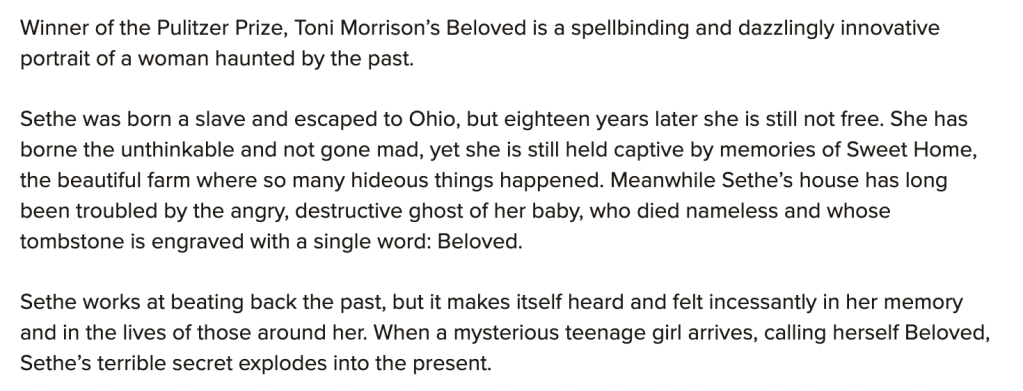
Reading the blurb tells us that this story will follow Sethe, a slave who has ‘escaped’ but is ‘not free’ because her baby’s ghost haunts her. The connection between the baby, the headstone engraved with Beloved, and the newcomer is eerie and strange, and only heightens those questions that I first asked.
Now, SPOILERS if you haven’t read the book:
Learning about what happened to Beloved at Sethe’s hands and her subsequent return is horrifying, and adds new questions to the mix. Why is Beloved here? What will she do? How will all of this end? The story is clearly about her from the start, and when one re-reads the book they can see how her place in the house as baby, ghost, and woman affects everything that Sethe chose to do. Personally, I found the title of ‘Beloved’ to be something rather sinister by the end of the story, yet also tinged with a bittersweetness. Beloved was Sethe’s daughter, whom she loved dearly. Yet, her place in the story hindered so much growth, ruined Denver’s chances of having a normal life, and Sethe’s actions could not atone for them no matter how much she loved her. It is a title that I find fascinating, and I’m still mulling over even today.
Babel by R.F. Kuang
So I actually haven’t read this book yet, and wanted to show you how this title analysis can be done without knowing the full story of a book.
In this single word, I am able to glean a lot about the potential themes that will be explored in the book. My knowledge of the history of the Tower of Babel tells me that this may interact with some Christian beliefs and ideologies.
In the Bible, the story of the tower of Babel is from Genesis 11:1-9 and I’ll put a little snippet below:

Essentially, this is treated as a story about human pride as they tried to build something that would reach to the heavens. God was not happy and made them all speak a bunch of different languages, and scattering them so they could not do that again.
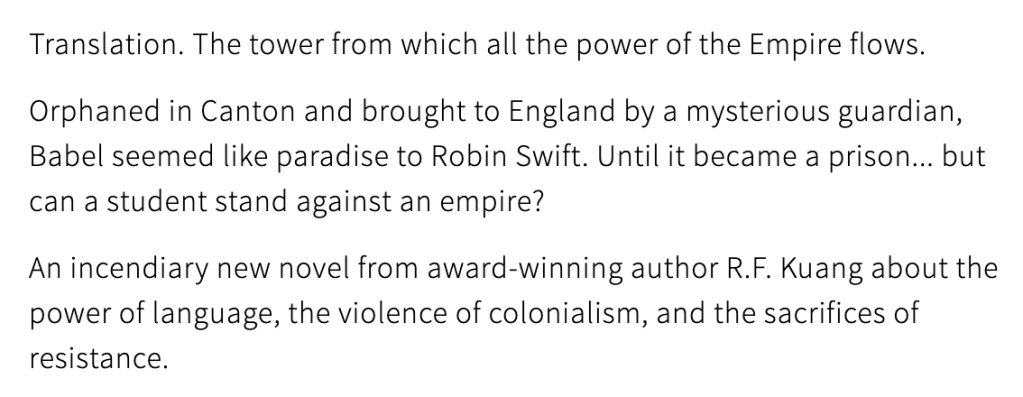
As such, I assume that there will be themes of power and division in the story. Also, as the title doesn’t include the ‘tower of’ part, I wonder if there will be a focus on the city itself as some sort of hub or setting? Reading the blurb confirms that this is a story about language and power in the form of colonialism and resistance.
Of course, I’ll have to read to see if my idea is accurate, and by the end I might have a new understanding of the concept of ‘Babel’ in the title too.
The Hunger Games trilogy by Suzanne Collins
Huge franchises like The Hunger Games (THG), Star Wars, and Game of Thrones have all been around so long now that I think people become a little numb to the titles. Each of these are very interesting when you really think about them, and influence so much of the story, so we need to consider them in more depth.
Today I will focus only on THG for the sake of time, but the others are fascinating case studies as well!
So let’s begin. As a title, The Hunger Games is incredibly strange so let’s break it down.
‘The’ = indicates that what we’ll read about is a specific and known concept in this fictional world
‘Hunger’ = invokes a sense of lack and starvation. Could this be the central issue of the story?
‘Games’ = gives a surprising contradiction, insinuates a spectacle and fun.
What will this mean all together? Starvation games? A game where you can gamble to no longer be hungry? People are making a game out of being hungry? These are all questions that arise as we consider this title and the story that we are about to read. Of course, as we learn later, ‘bread’ and ‘circuses’ is one of the key themes of the story, and this too is found right here in the title.
The second title in the series takes a different direction, as it is called Catching Fire.
Fire was already a big theme in the first novel, as Katniss was labelled the ‘Girl on Fire’ and she was badly burned in the arena during her first ‘games’. Hearing it again keeps the theme consistent, though the addition of the word ‘catching’ invokes a sense of escalation. Whatever happened in the first book, things are progressing.
Lastly, Mockingjay is a name that I understand after reading the books but if I hadn’t read the books I might not understand this. Instead, I might think about what the strange word sounds like. My initial thoughts might be that it sounds like mockingbird and the word mocking could refer to Katniss being mocked or mocking someone else through what she is doing. Or both! A Blue Jay is another type of bird so this bird motif is continuing, and it must have something to do with Katniss’ role.
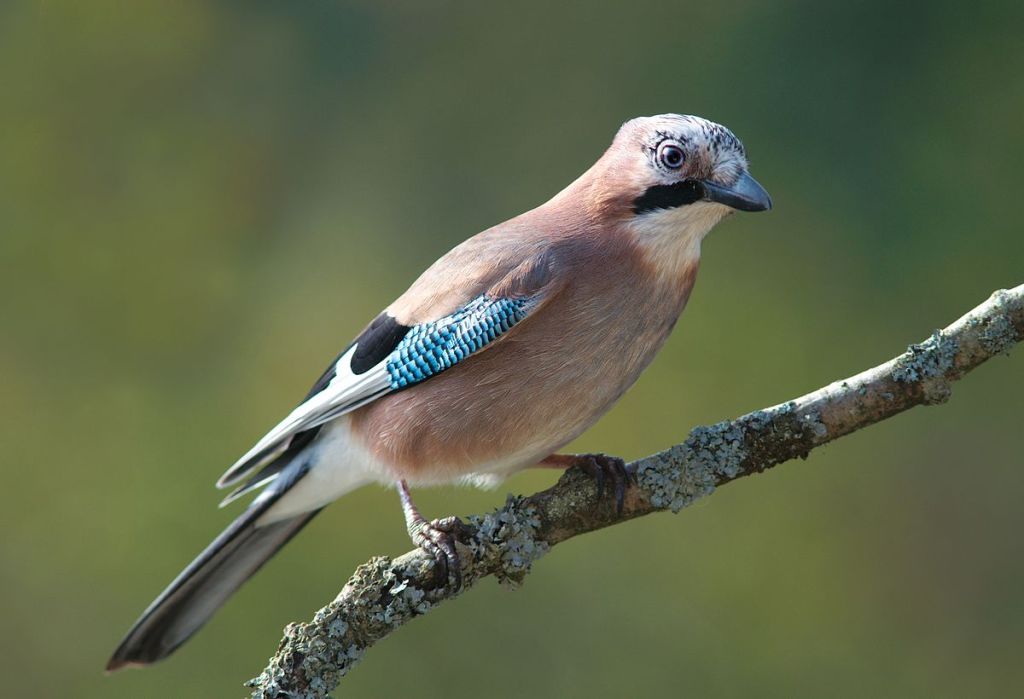
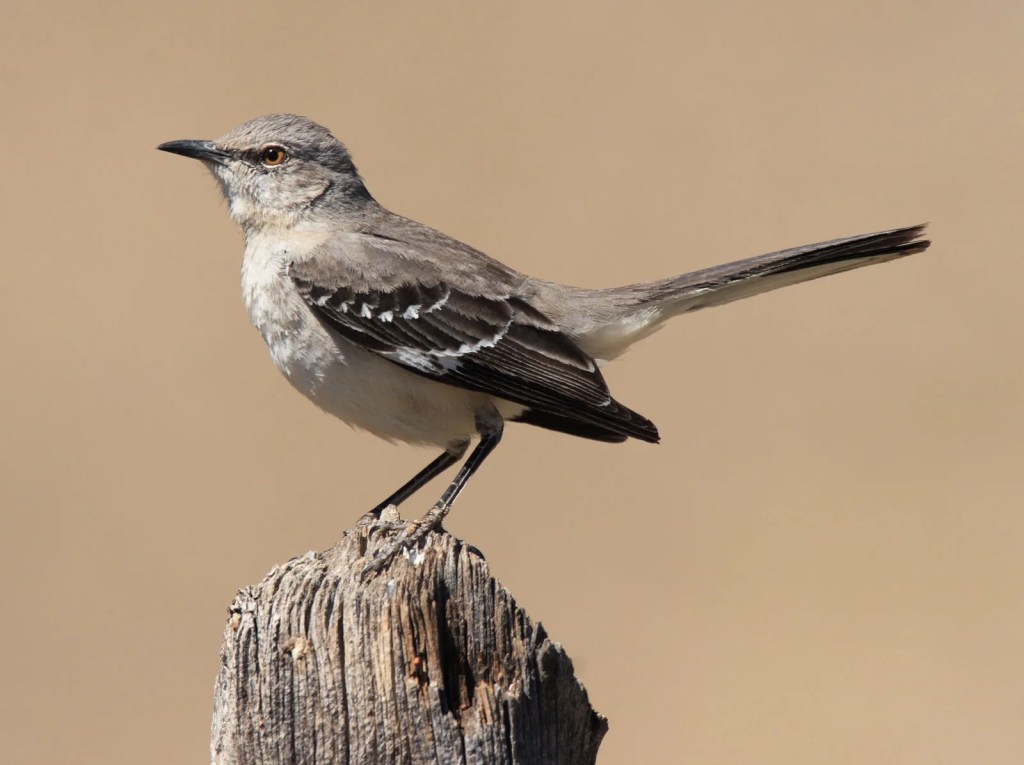
Now let’s ascribe our meanings! Clearly, both of these are birds, which are typically symbols of freedom, hope and new beginnings, so maybe this will indicates a positive end to the book. At the very least, I am expecting to read about a struggle of hope and freedom, which is what we get.
Finally, I want to discuss how these titles don’t exactly sound connected. They are because we know the content and can find the threads, but a layman probably wouldn’t see that. In today’s age, a series is usually expected to follow a similar format for all the books, so by that logic, we might have expected something like ‘The Quarter Quell’ for the second book and ‘The Capitol War’ for the third. Now, I’m not saying these are good or bad titles, but I don’t believe they would provide the same level of intrigue. Nor would they inspire people to think as deeply about the titles and the content of the books.
I also want to point out the number of words in each of the chosen titles. Intentional or not, the titles go from 3 words to 2 to 1 word. Now in the context, (and when we ascribe meaning!) this could represent the books counting down to a better future, but it’s also eerily reminiscent of the countdown in the arena, where at 1 the games begin. Katniss recognised that the war in the Capitol in Mockingjay is another sort of Hunger Games, where she must fight the real enemy is at ‘1’.
Tale of the Dragon Champion by Chris Devin title analysis
In a similar way I wanted to discuss my own book title, to look at why it was chosen and apply the same level of analysis to it.
Remember, breaking dow the words gives us valuable insight to them individually, and then combining them together provides us a more comprehensive overall view.
Tale = tales are often seen as cautionary, instructive, and/or representative of moral discussion. Think of things like Hansel and Gretel being about working together and not trusting strangers, or Red Riding Hood about being wary of strangers. These morals of course depend on who is telling the story, what details are given depending on which version you follow and so on, but they will always have some sort of moral.
Dragon = dragon’s have become much more popular these days, and as a result of that familiarity, have become less fearsome, so let’s go back to the roots of this word. Pretty much every ancient culture has a myth of some enormous and dangerous serpent, so they are quite commonly known. However, perceptions of them can vary, some western cultures believed they were able to breathe fire, while Eastern cultures, like China associate them with water and storms. No matter where they were from though, they were dominating and powerful, and we mostly still remember them as such.
Champion = this word has multiple meanings and definitions (see below), and thus can be interpreted in a few different ways. Readers may wonder who the champion ‘subject’ is, who they are fighting for, and who actually sees them as a ‘champion’ within the story (or not…)

https://www.merriam-webster.com/dictionary/champion
So, putting all of those elements together, we can guess that this may be a fantasy story that also has some sort of cautionary or moral ‘tale’ within it.
As there is no gendered language in the title, and we learn from the blurb that there are two characters, we can begin to question and theorise which of the characters may be the ‘champion’. Additionally, through this deprivation of a solid answer to that question, this ‘tale’ can become about many people. Further, the blurb helps us to recognise that this story is not just about liberation, but also about power, shown through the character’s struggle with it as Alek uses his to make changes and Nadya decides whether to embrace it or not.
Altogether we may recognise that this story is about a person who, with a dragon, becomes a great champion. But of who? To who? And what will they do? Lastly, the wording may cause us to question if the relationship of the champion and dragon, whether they are friends, owner and pet, or perhaps somehow both dragon and champion… These are all questions that you can glean from this title, and which will be answered when you read and connect the dots.
Conclusion
There you have it, my analysis on a few different book titles, their importance, and the ways in which these titles are enhanced with and by reading. Titles are hugely important, and while they can give us insight into the book before reading, I find that their value is more evident during and after the reading process. Babel, Beloved, The Hunger Games and my own book Tale of the Dragon Champion are each unique and interesting studies that provide context and deeper meaning when reinterpreted later on.
Analysing these book titles is made easier when we think about how we can attribute different ideas and new knowledge to add meaning. In doing so, we are able to make deeper connections and better understand the stories that we are reading.
So, I hope that you’ve enjoyed reading and that you learned something about literary analysis that you may use going forth. But now: seeing as you’ve already read my interpretations, and had some practise, let’s try this idea with another book! Here are two options:
Looking for Alaska by John Green OR Game of Thrones by George R.R. Martin (you can also write about another one if you’re feeling inspired! I would love to read it too!)
If you’ve read either of these books, try to pick apart the title using your knowledge of the book.
If you haven’t read them, do what I did with Babel. Ask questions and write your theories. Who knows, maybe you’ll end up wanting to read the book to find out!

 Devin's World
Leave a comment