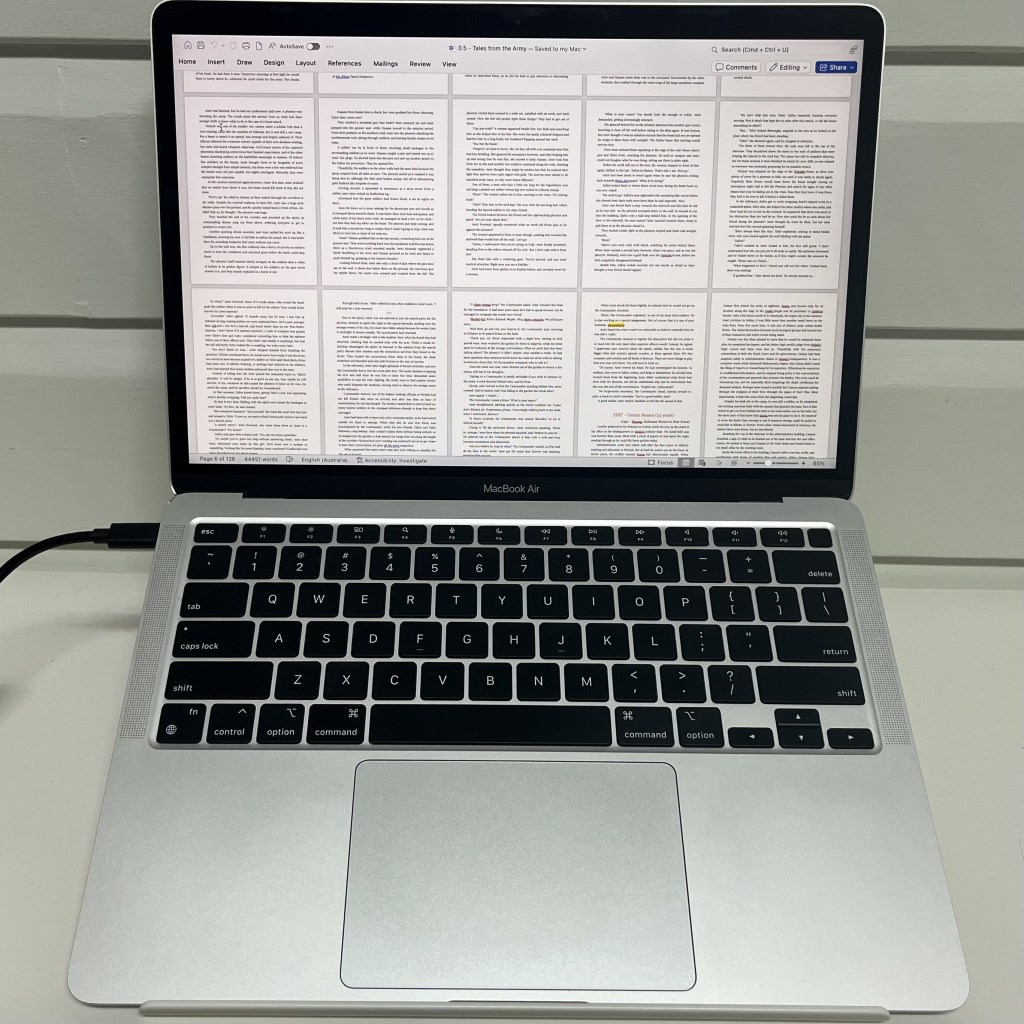
As someone who has written a handful of books now (published or not!), I have plenty of experience with first drafts.
For many first time authors, and even more advanced authors, first drafts can be scary. Looking at a blank page and expecting yourself to write can be difficult, and possibly anxiety-inducing.
However, if you opened this post, I’m guessing that you want to be a writer, and you want to push through to create something amazing!
So how do you do it?
First you need to remember that we all have to start somewhere. Think of your favourite author, and your favourite book from them. No matter what genre, what characters, what plot they wrote about, there was a time when this book was just a set of ideas in their mind. They definitely had to stare at a blank document at some point as well!
If they can do it, so can you. Stop focusing on your fear and start focusing on your future. If you want to be a writer, let this be a reality check: get serious about it.
Second, you need to find a starting point. When writing, it can be easy to get caught in a trap of thinking that you need to start at the ‘beginning’ of your book and write in chronological order.
Personally, I fell into this trap too when I began drafting Tale of the Dragon Champion, so just know that it happens to everyone. It was only when I started writing the scenes that I loved the most that I was able to speed up and finish my draft. By starting with the bigger action scenes at the end of the book, I was excited about my work, and had a clearer idea of where the story was headed. Then it was less about making up everything that happened before, and more about figuring out what led to this ending.
Remember, if you find a scene boring as the writer, how much more will your reader dislike it?
Start with the epic battles or character arguments or romantic gestures that you think of the most. In doing this, you will get these big ideas on the page and out of your mind so you can free yourself up to think about other scenes. In addition, it will motivate you to write more, as you can start with the parts you love, build your confidence as a writer, and get the ball rolling.
Of course, writing these scenes may even answer some questions you have about earlier parts of the book. For example, as you write about two of your characters arguing, you might be able to allude to an event that happened in the past, which led to their rivalry.
Such was the case with two of my own characters, who I knew hated each other, though I didn’t have a reason why. It was only when I wrote the ending of the book that it all made sense, and I was able to go back to enrich those previous scenes in which they interacted.
Thirdly, remember that a first draft is all about what is happening. It doesn’t have to have pretty language, nor good dialogue or scene descriptions. A ‘good’ first draft has words on a page that tell you what happens in each chapter. You can write as much or as little as you like! Subsequent drafts are meant to tidy it up and make it pretty – so don’t worry about that now.
For each chapter or scene you plan to write, start off with a couple of sentences that tells you what happens in the scene. Remember, this is a reminder for you as an author.
In this summary, it is a good idea to include some of the following to help you out:
- what the character knows or believes at the moment
- what the audience should feel/know
- what you as an author should know/share/tell or not tell
For example, this is a summary similar to what I might use while drafting:
(Character A goes to meet Character B and gets lost in the manor. They find a room where another group of characters are meeting, and A overhears a plan to kill B. Worried about B, A goes to tell them what they heard. B is actually going to betray A later in the book, but for now, A thinks that B is a mentor and friend. Group is afraid of B, so they speak in hushed tones – they mention a place that A will ask about later.)
This example shows a number of key events that will occur in the scene, as well as a general plan for what you as an author can foreshadow. It can help you build tension and keep the future events in mind so they become even more impactful.
Writing a brief summary like this is NOT to constrain you. If you write another scene and come back to this one, don’t feel the need to stick with the first thing you wrote. It is always flexible, and you can adjust as needed.
For instance, if you later decide that B will not betray A, you can leave the tension in or change it slightly. Perhaps the ‘Group’ I mentioned becomes evil, or perhaps it is all a big miscommunication and there is another even bigger bad guy out there setting B and the Group against each other. Will A rescue both? Will A succumb to the plans of the new antagonist?
My last piece of advice is to remember to ask questions! Questions are the best way to continuously develop your story and grow the world and characters you are writing about. Pretend you are the number one fan of your books (because lets face it, you kind of are!) and act like you want to know everything about this world.
Using the example above with Characters A and B, you can ask questions like:
Why is A going to meet B? How did A and B meet? What did B do to win A’s trust? Has A met the group of characters before? If so, what does A think of them? What does B think of them? What is the goal of each character?
You don’t have to figure out all the answers straight away, but you should keep a record of them. I found that by writing them into a spare word document, I would have them stewing in my mind until inspiration hit and all of a sudden I would have an answer while sitting on the train or going for a run. The answers to these questions may surprise you, and will absolutely result in a richer story.
So there you have a few of my tips on how to write a ‘good’ first draft.
Now keep in mind, as the legend himself Neil Gaiman said, a good first draft simply needs to exist – you make it look like you knew what you were doing in the second draft!
Even so, to become the author you dream of being you have to get serious and put in the work. If you can’t write from the beginning of your story, start with the scenes you think of the most. Get those on the page so you can make room for your other scenes, and so you can get your mind into the story.
Write what happens – it doesn’t need to be good, and it doesn’t even need to be comprehensive. As you go, turn plot holes into questions and save them for later, but don’t be afraid of them! Return to them in the second and third drafts, all you need to do with a first draft is write what your characters do and say. Later on you can add in all the nice descriptions and clever dialogue.
First drafts aren’t as scary as people make them out to be, and they are only as difficult as you make them.

 Devin's World
Leave a comment